
Since 2021, I have been a visiting postgraduate lecturer in Ecuador at the Universidad Andina Simón Bolívar and FLACSO, teaching subjects that combine a critical theoretical perspective on geography with disruptive methodologies in spatial representation. This background has enabled me to teach in various formal and community-based educational settings at different Latin American institutions.
This page explores some of these experiences in greater depth
Master’s Degree in Political Ecology at the UASB
Since 2021, I have been teaching the module ‘Remote Sensing, Climatology and Geographic Information Systems’, where I have been able to support the spatial analysis and cartographic needs of six cohorts of students who have developed interesting research topics.
I have also been fortunate enough to supervise dissertations on community-based agri-food organisations in the Amazon, eco-neighbourhoods in Bogotá and urban anti-mining struggles in Cajamarca.
In these contexts, I have been able to bring together insights from political ecology through activist cartography and the spatial thinking of critical geography.
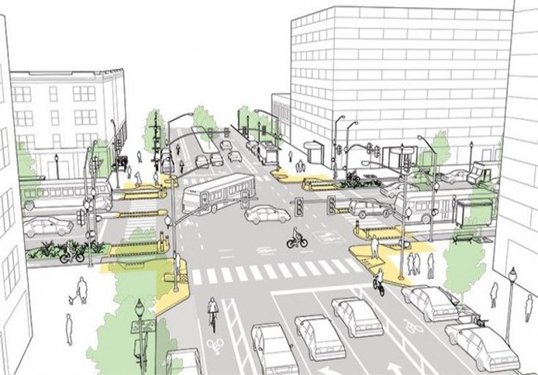
FLACSO Master’s in Urban Studies
Under the 2020–2025 curriculum, I was able to teach the theoretical module on spatial theory entitled ‘Critical Geography of the City and the Territory’. Following the change to the curriculum in 2026, I contribute to the modules ‘Urban Informality, Peripheries and Marginalisation’ and ‘Qualitative Methods and Social Cartography’.
In addition to providing theoretical and methodological support, the presence of postgraduate students working specifically on Amazonian urbanisation has enabled me to guide thesis research linked to my area of specialisation.
Cartographic Practices in Latin America
An interesting team from the National University of Rosario and the Pontifical Javeriana University of Cali launched the “Interdisciplinary Diploma in Cartographic Practices in Latin America”, which, from 2024 to 2026, has enabled interaction with students from a wide variety of social movements and communities. I am participating as a lecturer on the modules “Engaged social cartography” and “Human Rights Impact Assessment with a Territorial Focus”.
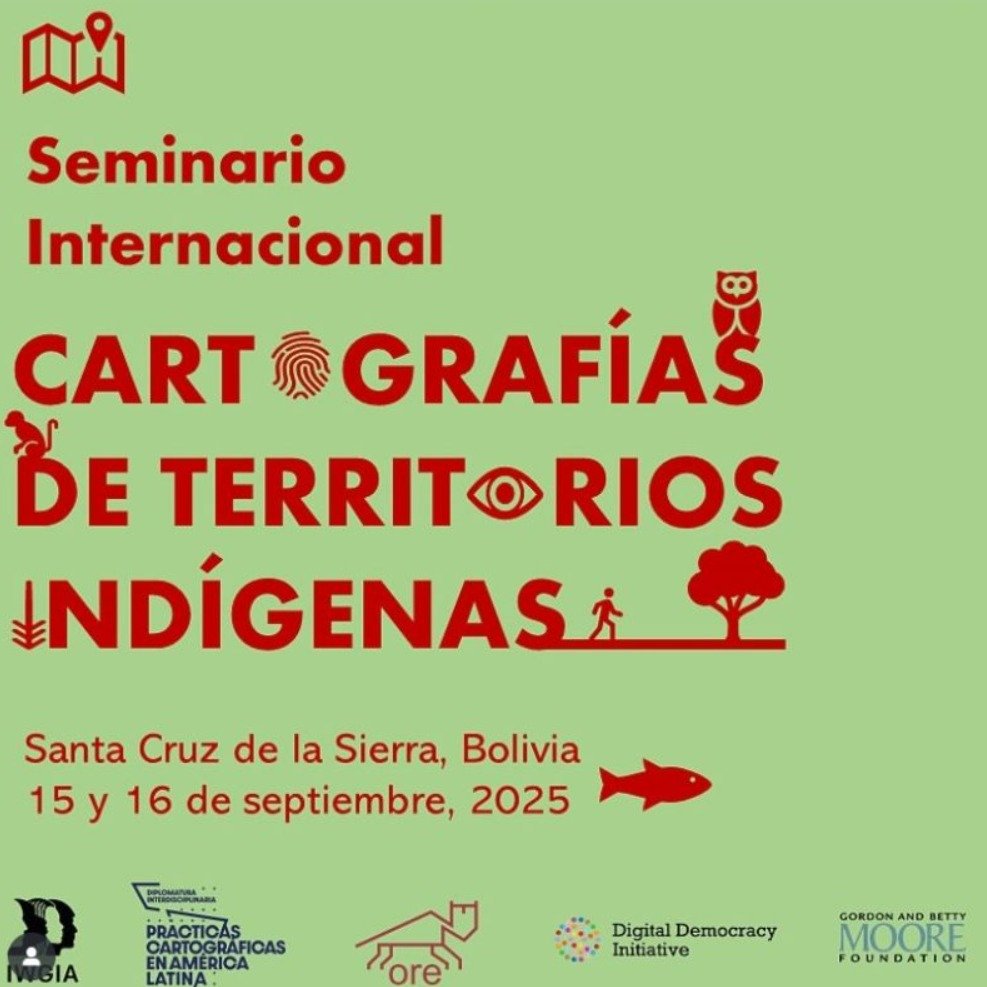
As an extension of this, following the International Seminar on Cartographies of Indigenous Territories held in Bolivia, the “Diploma Course in Indigenous Cartographies and Territorial Power” is currently being developed in collaboration with the National University of Rosario (NUR) and IWGIA, in which I teach the module “Law and Territorial Management in Urban and Peri-urban Contexts”.
Consejo Latinoamericano de Ciencias Sociales
Critical Urbanism
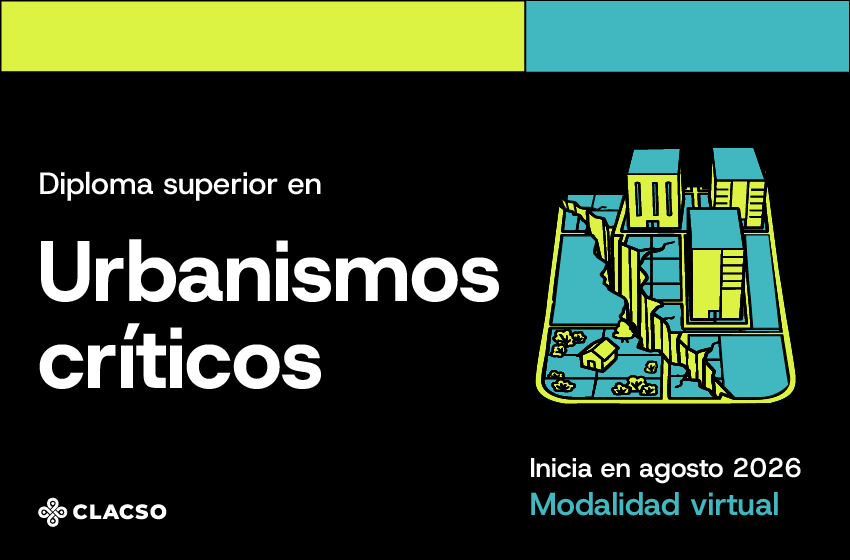
At CLACSO, in 2026 I co-coordinated the Advanced Diploma in Critical Urbanism, which features a wonderful selection of leading figures from Latin America and Spain in these fields.
In previous years, I co-coordinated CLACSO’s online seminars ‘Political Ecology, Socio-ecological Conflicts and Resistance from the South’ and ‘Critical Perspectives on Territory from the Standpoints of Latin American Feminism and Environmentalism’.
During my postdoctoral period in Mexico
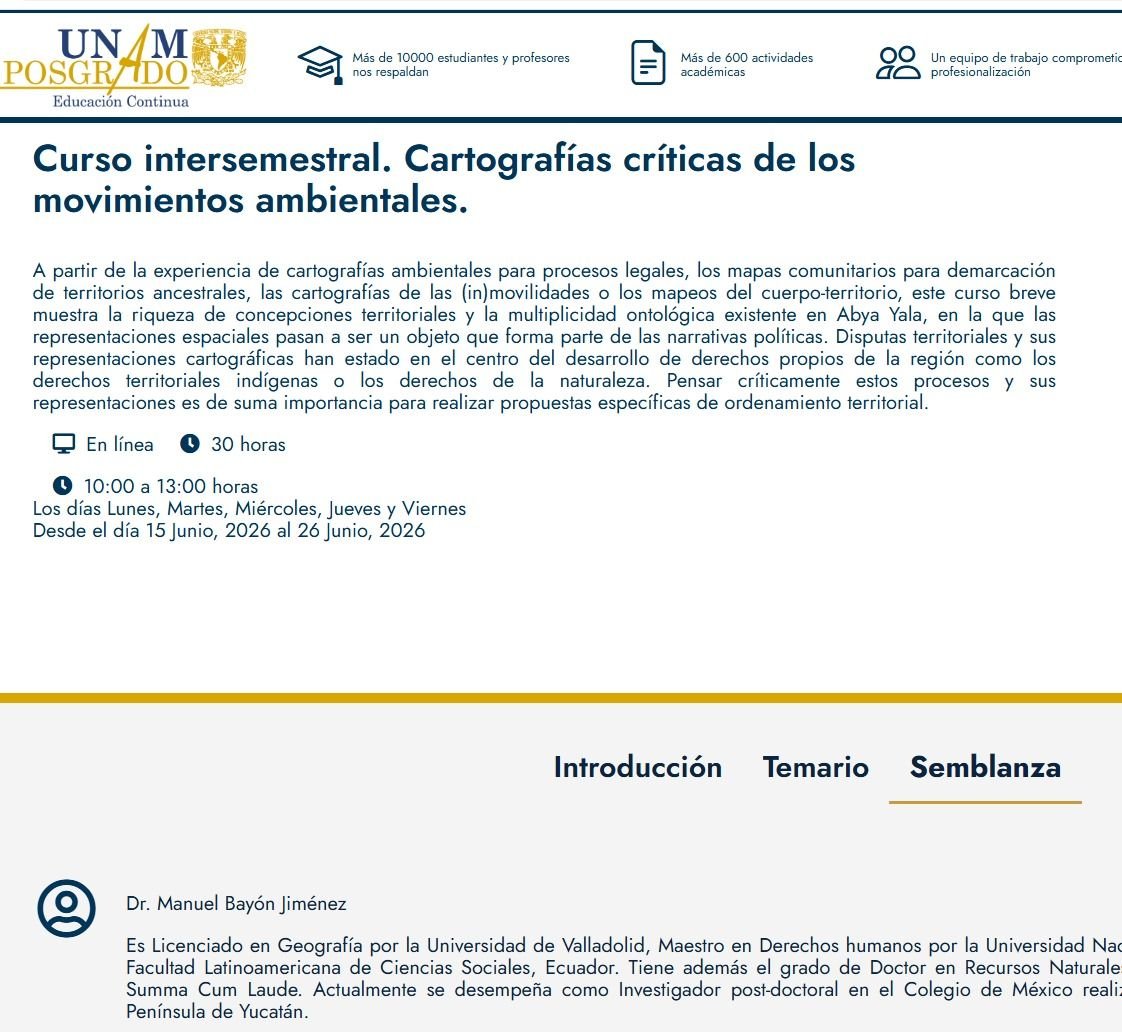
I had the opportunity to work at El Colegio de México as a co-supervisor of Master’s theses at the Centre for Demographic, Urban and Environmental Studies, on topics such as the political ecology of the oil infrastructure in Tabasco and the privatisation of motorways in Mexico. I also served as a visiting lecturer in the postgraduate programme at UNAM, teaching courses on ‘Critical cartographies of environmental movements’.
And together with colleagues from GeoBrujas and the organising committee of the International Congress of Critical Geographies (held in Mexico City in 2023), we launched the ‘Specialisation in Social Geography and Community Cartography’ at the Centre for Rural Development Studies (CESDER) in the Sierra Norte of Puebla, where I was involved in designing the curriculum and teaching for two of the four terms.
Manuel Bayón Jiménez
The purpose of this website is to share publications and information on critical-radical geography, Amazonian urbanisation, political ecology, Indigenous resurgence, and activist mapping, as well as to visually present my Curriculum Vitae.